After a maintenance crew finishes draining a narrowbody plane during a scheduled level C check, the fuel goes into an open-top gravity bowser that’s been on the ramp for a decade. Two days later, the lab results are back: water content above limits and particulate count failed. Countless gallons of Jet-A, written off, and the bowser goes back out to the ramp for the next job.
This happens more often than most facilities track, because operations often focus on fuel quality at the point of delivery, rather than the point of recovery. Fuel farms have multi-stage filtration, refueling trucks have water separators and airport distribution networks are tested and monitored before fuel ever reaches an aircraft wing. But when fuel comes out of the aircraft during maintenance, it passes through whatever recovery equipment the facility happens to own. If that equipment has no filtration, no sealed containment, and no contamination controls, it’s degrading fuel that could continue to be used.
Selecting the right fuel bowser is among other things, a fuel quality decision. The equipment doing the draining either protects recovered fuel or compromises it; there’s no neutral option.
What Contaminates Recovered Fuel (and Where It Comes From)
Aircraft fuel tanks are not clean environments to begin with. Condensation accumulates on interior tank walls during the temperature differential between cruise altitude and ground level. Microbial colonies grow at the water-fuel interface, producing acidic byproducts that corrode aluminum structure. Sealant fragments, O-ring material, and foreign object debris collect in tank baffles and low points over flight cycles, and all of this mobilizes when defueling begins.
That’s the contamination the aircraft contributes, but the recovery equipment compounds it.
An open collection vessel on a humid tarmac absorbs ambient moisture for the entire duration of the drain. A bowser with corroded internal surfaces sheds particulates into the fuel it’s supposed to be protecting. Hoses that sit coiled on the ramp between jobs collecting dirt and rainwater, introduce contamination before the first gallon hits the tank. Gravity drain methods that route fuel through open funnels or into non-standardized containers give atmospheric contaminants continuous access to the fuel stream.
The problem compounds because nobody isolates the source. Facilities don’t typically sample fuel at the sump point before it enters the bowser and again after. The fuel goes from aircraft to recovery vessel, might get tested downstream, fails, and the degraded fuel loses value. The bowser goes uninvestigated. The F-4 era method of opening sump plugs and letting fuel hit the tarmac is gone, but some of the equipment still in service isn’t far removed from that philosophy. It’s a closed container instead of the ground. The fuel quality outcome isn’t dramatically different.
The Cost Nobody Attributes to the Equipment
When recovered fuel can’t be returned to service, the costs compound. Boeing’s 777 delivery prep team was selling reclaimed fuel to a contractor at a loss each month, a practice costing thousands of dollars before they switched to a filtration-equipped recovery system. At the DoD level, DLA facilities were losing millions annually to fuel evaporation and contamination before vacuum recovery was introduced. The operational cost of slow fuel handling adds hours to every maintenance event that requires defueling.
The 2007 Secretary of Defense Environmental Award citation for Fairchild Air Force Base specifically called out SealVac’s role in eliminating fuel spills and reducing hazardous waste. The equipment wasn’t cited for speed it adds to the defueling process. It was cited for what it prevented from happening to the fuel and the environment around it.
Most facilities treat these costs as a fixed operating expense. They’re not fixed, they’re a direct function of equipment that wasn’t built to protect what it recovers.
What Sealed Recovery and Integrated Filtration Change
The difference between recoverable fuel and waste fuel comes down to two engineering decisions in the defueling equipment: whether the fuel path is sealed from the atmosphere, and whether filtration happens during recovery or not at all.
Sealed vacuum recovery eliminates open-air exposure at the drain point. Fuel moves from the aircraft sump through sealed hoses into a sealed, double-walled collection tank under vacuum. No atmospheric moisture entering the fuel stream. No airborne particulates settling into an open container. No human contact with the fuel at any point in the transfer.
Integrated filtration removes contaminants during the recovery process rather than requiring a separate re-processing step after the fact. An aviation-grade coalescing filter element strips particulates and separates water from the fuel as it leaves the collection vessel, producing recovered fuel that’s ready to go back into service. Secondary filtration options, like a fuel drying monitor, add another stage of moisture removal for operations with tighter quality thresholds.
An easily accessible sediment chamber collects FOD and debris during operation. The screened insert is cleaned weekly as part of routine maintenance.
The practical outcome: fuel recovered through a sealed, filtered system that can go back into service, when fuel recovered through an open, unfiltered system usually can’t. Same aircraft, same fuel, but different equipment that earns different results.
Spokane Stainless Technologies’s Filtration-Forward Defueling Systems
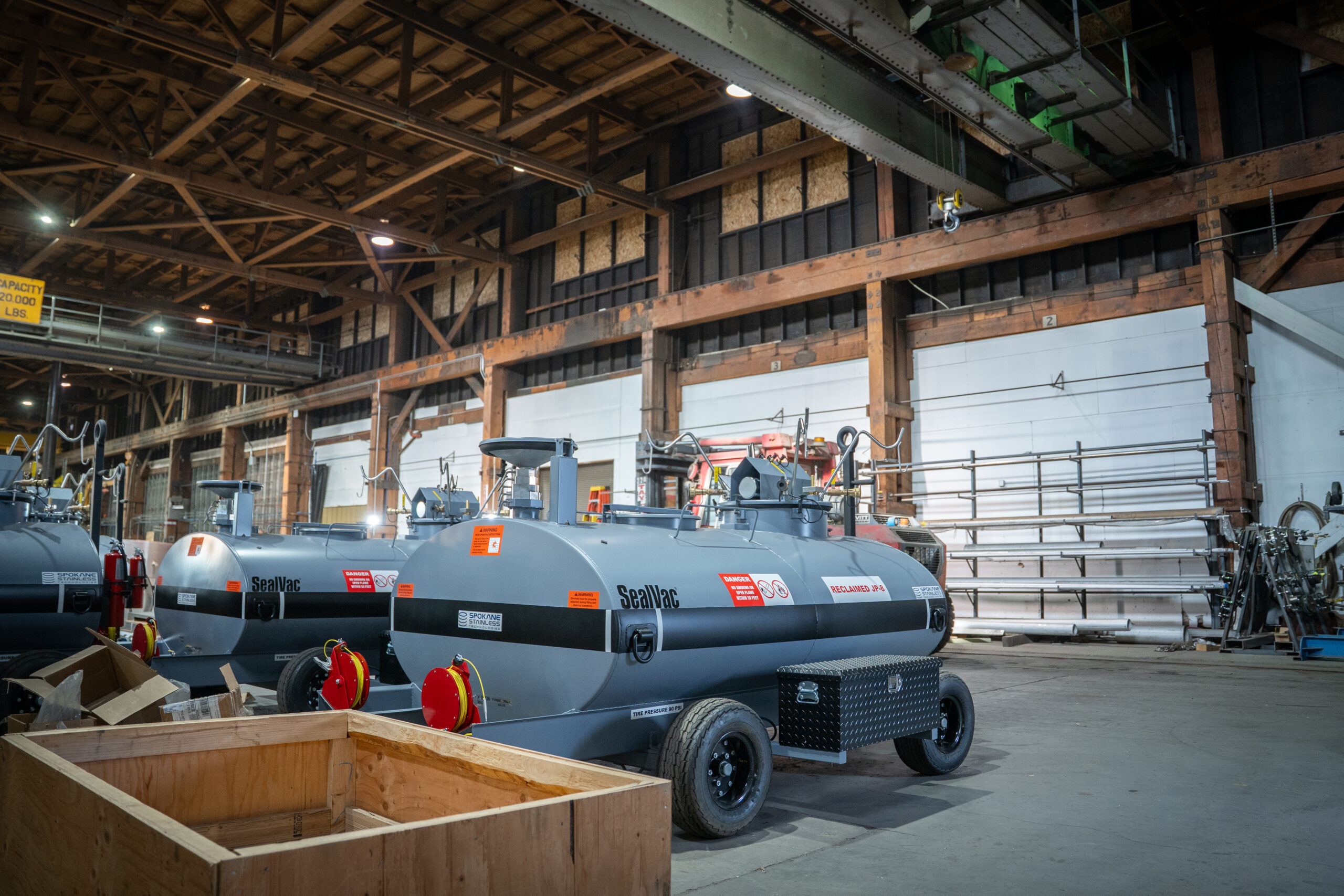
Spokane Stainless Technologies builds two defueling systems with integrated filtration designed to recover fuel that meets reuse standards.
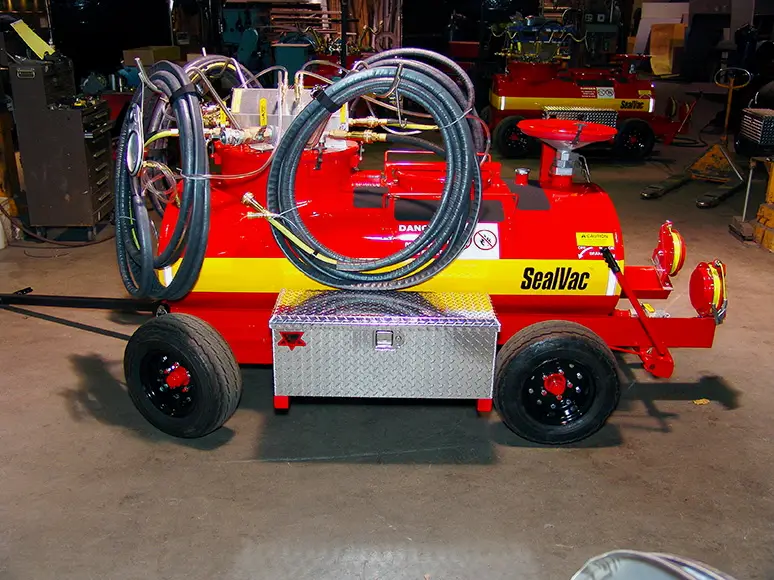
SealVac Plus® generates vacuum suction at the aircraft sump points using compressed air, pulling fuel through sealed duplex hoses into a double-walled stainless steel collection tank. An aviation-grade coalescing filter element removes particulates and water during recovery. An optional fuel drying monitor provides secondary moisture filtration. A rear-mounted 20 GPM pneumatic diaphragm pump transfers recovered fuel into storage tanks or other equipment, with or without the vacuum system running. The depuddling hose clears residual fuel and FOD from tank cavities and baffles that gravity draining leaves behind. Available in 400 and 600 gallon configurations.
eSealVac™ is Spokane’s fully electric, self-contained defueling system. No compressed air supply required. A 25 GPM continuous-duty fuel transfer pump and a Becker VT 4.8 rotary vane vacuum pump run on 24VDC battery power. At the inlet, a Spokane-engineered cyclone assembly uses centripetal force to pre-filter particle debris before fuel enters the collection tank. The cyclone separator removes FOD and solid contaminants during recovery, protecting stored fuel from particulate degradation.Both systems recover fuel through sealed paths into double-walled stainless steel tanks. Both eliminate open-air fuel exposure during the entire drain process. Both are built so the fuel in the tank at the end of the operation can go back into an aircraft. Explore Spokane’’s full fuel solutions lineup.
Recovered Fuel Is an Asset, Not a Byproduct
Every gallon of recovered fuel that meets quality standards for reuse is a gallon that doesn’t need to be purchased again. It also eliminates disposal fees that come with fuel too contaminated to return to service. For an MRO running numerous heavy maintenance events a year, the volume adds up fast, and so do the write-offs, if the recovery equipment isn’t protecting what it collects.
The filtration, the sealed containment, the vacuum recovery that prevents atmospheric exposure: these aren’t accessories bolted onto a drain cart. They’re the engineering that determines whether an operation recovers fuel or recovers waste. The equipment is the variable. Contact Spokane Stainless Technologies to spec a SealVac Plus or eSealVac for your maintenance operation: sstfuelsolutions.com.